
The Colon System - Functional Manual Treatment
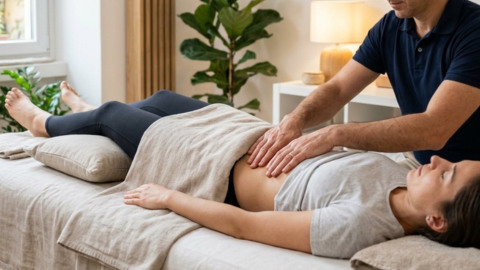
The Colon System - Functional Manual Treatment
This course includes
The instructors
Overview
The colon is a complex visceral system that plays a pivotal role in systemic health. This course explores the connection between the visceral system of the colon and the musculoskeletal framework.
A dysfunction in colonic motility can have effect throughout the body, manifesting as persistent postural imbalances, acute and chronic pain.
For the modern physiotherapist, understanding the colon’s anatomical relationships, its motility and mobility is essential. This course provides the clinical tools to differentiate between primary pelvic/lumbar issues and referred visceral pain, ensuring a comprehensive approach to patient recovery.
Learning Objectives
In this online course, you will learn:
- Mechanisms of peristalsis: Deepen your knowledge of the physiological waves of peristalsis and how manual intervention can support the restoration of natural colonic rhythm.
- Differential diagnosis and red flags: Master the ability to differentiate the origin of pelvic and lumbar pain, identifying when the colon is the primary "driver" of the patient's symptoms.
- The impacts of dysfunctions: Analyze the link between intestinal health and systemic symptoms like chronic fatigue, caused by metabolic and inflammatory stress or the effect on frequent low back pain or pelvic pain.
- Hands on anatomy: Map the precise position of the colon and its fascial connections to postural structures, such as the psoas muscle, the rapport with other viscera an learn how to treat.
- Manual treatment techniques: Learn gentle, non-invasive manual techniques to respect patient sensitivity, to facilitate the mobility and physiology of this viscer and to help patients in recovery, with constipation or other musculo scheletal funcional
Audience
This course is specifically designed for physiotherapists, osteopaths, and manual therapists who wish to expand their clinical reasoning beyond the musculoskeletal system. It is ideal for practitioners who:
- Treat patients with "non-specific" chronic low back or pelvic pain.
- Work with athletes, high level performers or patients experiencing unexplained fatigue and digestive distress.
- Specialize in pelvic health and want to understand the visceral influences on the pelvic floor.
- Seek to refine their manual skills with gentle, high-precision visceral techniques.
What's Included
This course includes:
- 2.5+ hours of video lessons
- Lifetime access to the course
- Knowledge check quizzes
- Certificate of completion
- Colon health handbook for patients
- Downloadable resources to complement the video lessons including:
- Anatomy
- Mobility
- Indication for treatment
- The colon and gut microbiota
- Peristalsis
- Anatomical landmarks
- Red flags
- Spinal vs. visceral referred pain: differential diagnosis of back pain
- Colonic vs pelvic pain: differential diagnosis flowchart
The instructors

PT, D.O., First-Level Master’s Degree in Clinical Vocology
Italy-based physiotherapist, osteopath, and clinical vocologist with more than 20 years of experience supporting high-performance athletes and elite performers. Specializing in high-intensity clinical care, they provide targeted on-stage and studio treatments during international tours to help ensure performance continuity in demanding environments. Their clinical expertise focuses on the rehabilitative treatment of complex vocal disorders and stomatognathic dysfunctions, integrating advanced manual therapy techniques with visceral osteopathic applications as a key component of rehabilitation.
In addition to clinical practice, they serve as a Head Instructor and lecturer for university Master’s programs and continuing medical education providers, teaching osteopathy and manual therapy to osteopaths, physiotherapists, and speech-language pathologists. They are also Head Instructor of visceral techniques at ASOMI – Osteopathic College of Science in Turin.
Material included in this course
-
Introduction and Downloadable Resources
-
Welcome!
-
Downloadable Resources
-
Section 1 - Anatomy
-
Anatomy
-
Mobility
-
Indications for Manual Treatment
-
Feedback
-
Section 2 - Colon and Microbiota
-
Colon and Microbiota
-
Microbiota Quiz
-
Feedback
-
Section 3 - Peristalsis
-
Peristalsis
-
Peristalsys Quiz
-
Feedback
-
Section 4 - Landmarks Theory
-
Landmarks Theory
-
Feedback
-
Section 5 - Red Flags
-
Red Flags
-
Red Flags Quiz
-
Feedback
-
Treatment Demonstrations
-
Appedicitis Tests
-
Superficial Treatment
-
Deep Treatment
-
Patient Exercise
-
Feedback
-
Conclusion, Exam and Course Evaluation
-
Conclusion
-
Knowledge Check
-
Course evaluation
Is manual treatment of the colon dangerous?
No, when performed correctly. The techniques taught in this course are based on a gentle and respectful approach to the patient's sensitivity. We emphasize light touch and gradual mobilization rather than aggressive pressure. By following the physiological barriers of the tissue and respecting post-surgical outcomes, the treatment is safe and often very relaxing for the patient.
Is this course useful for treating low back pain ?
Absolutely. The colon has direct anatomical relationships with the posterior abdominal wall and the psoas muscle. Chronic dysfunction, such as constipation or inflammation, can create visceral tension that affect the lumbar phisiology. Learning to release these visceral restrictions is often the "missing link" for patients who do not find permanent relief through standard orthopedic physiotherapy.
Can this approach help with groin pain?
Yes. The cecum (on the right) and the sigmoid colon (on the left) sit sometimes in close proximity to the inguinal canal and the nerves that travel to the groin area. Visceral congestion can irritate these nerves or cause compensatory tension in the hip flexors.
Is the treatment contraindicated for patients with diastasis recti?
It is not contraindicated; in fact, it is often recommended. While therapists should avoid heavy localized pressure on the midline, gentle visceral mobilization can reduce intra-abdominal pressure caused by gas and constipation. By improving colonic motility, we can reduce the outward "push" on the abdominal wall, which supports the rehabilitation and management of diastasis recti.
How important is the colon when dealing with uterine or pelvic issues?
The colon and the uterus share almost the same space and are connected via fascial ligaments. Problems in one organ often affect the other due to viscerosomatic reflexes and shared venous drainage. If a patient suffers from pelvic pain or menstrual discomfort, evaluating the colon is essential to ease these symptoms.
US PTs and PTAs: How many CEUs has this course been approved for?
This course has been approved for 3.25 CEUs (Continuing Education Units) for Physical Therapists and Physical Therapy Assistants in the US. Please see the FAQ 'Has this course been approved for CEUs (Continuing Education Units) for Physical Therapists and Physical Therapy Assistants in the US?' for a detailed list of the approved states. In order for your US jurisdiction information to appear on your course certificate, you must complete your jurisdiction information on your Embodia profile as per this guide.
Has this course been approved for CEUs (Continuing Education Units) for Physical Therapists and Physical Therapy Assistants in the US?
Yes, Embodia is a rule-approved CE provider of the PT Board of Florida (# 50-54793), a licensed CE sponsor of physical therapy continuing education by the Illinois Department of Financial & Professional Regulation (IDFPR #216.000415), an approved provider of continuing education by APTA Massachusetts, an approved provider of the Oklahoma Board of Medical Licensure & Supervision - Physical Therapy (#50-54793), and an approved provider of continuing education for Physical Therapists and Physical Therapist Assistants in California (CA) by CEUapproval.com, a recognized approval agency of the Physical Therapy Board of CA.
Courses approved by other state boards in the following jurisdictions are likely accepted for licensure credit based on the state regulation:
AL | AK | AR | CO | CT | DE | GA | HI | ID | IL | IN | IA | KS | KY | ME | MA | MI | MO | MT | NE | NH | NC | ND | OK | OR | PA | RI | SC | SD | UT | VT | VA | VI | WA | WI | WY
Please reach out to your state licensing board to confirm. If you have a specific question about CEU approval for this course in your state, please direct your inquiry to info@ceuapproval.com
The following states are not pre-approved: AZ, DC, LA, MD, MN, MS, NM, NV, NY, NJ, OH, TX, WV
Participants licensed in states not pre-approved may file for individual approval using the instructions on this document.